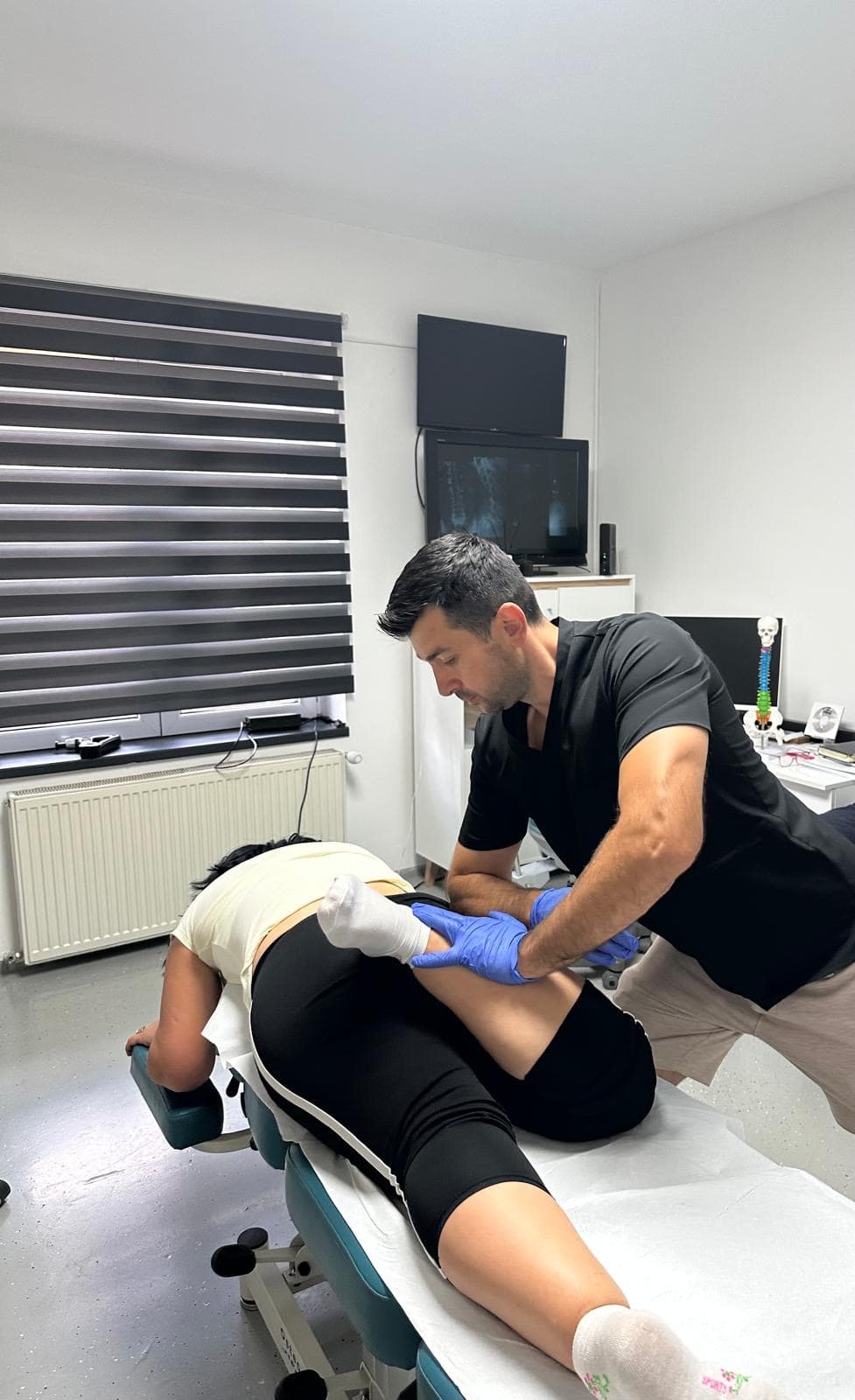
What is Deep Tissue Massage?
Deep tissue massage uses slow, firm, sustained pressure to work through the superficial muscle layers and reach the deeper connective tissue beneath. The goal is to address chronic tension, adhesions and fascial restrictions that develop over time through repetitive movement patterns, poor posture, injury or prolonged physical stress.
The technique draws on cross-fibre friction, myofascial release, trigger point therapy and sustained compression to break down areas where muscle fibres and fascia have become bound together. These adhesions restrict movement, create pain referral patterns, and force surrounding structures to compensate — often leading to secondary issues in adjacent areas.
Deep tissue massage does not mean excessive pressure. It means appropriate, progressive pressure applied with precision. At GMX, session intensity is always calibrated to your tissues — not to a fixed standard — and adjusted continuously throughout the treatment.

Your Treatment Journey
Here's what to expect during your deep tissue massage session.
Assessment
Assessment
Each session starts with a brief assessment of your posture, movement patterns and primary areas of concern. This shapes the treatment so every minute is spent on what genuinely matters for your body — not a generic routine.
Warm-Up
Warm-Up
Pressure begins at a moderate depth working through superficial tissue layers. This prepares the muscles and fascia for deeper work, increasing blood flow and allowing your body to respond progressively rather than defensively.
Deep Work
Deep Work
Using cross-fibre friction, trigger point therapy, myofascial release and sustained compression, your therapist works through adhesions and fascial restrictions. Intensity is calibrated to your tissue response and adjusted continuously — you should feel productive intensity, not uncontrolled discomfort.
Cool-Down & Advice
Cool-Down & Advice
The session closes with lighter strokes to calm the nervous system and flush treated tissue. You receive aftercare advice — hydration, rest, avoiding intense exercise for 12–24 hours, and a realistic picture of how your tissues responded and what follow-up may help.
Conditions Commonly Addressed
Who Benefits from Deep Tissue Massage?
Deep tissue massage works for a wide range of people — not just those with sports injuries.
Office Professionals
Long hours at a desk, laptop or on video calls build chronic tension in the upper back, neck and shoulders over months or years. Deep tissue massage works at the structural level — addressing tissue quality, not just surface symptoms.
Active Individuals & Gym-Goers
Consistent physical training accumulates dense muscle tension that affects both performance and recovery. Regular deep tissue work maintains tissue health alongside training and helps prevent compensatory movement patterns.
Those Recovering from Injury
Protective guarding and scar tissue often develop in the area of an injury. Deep tissue massage, as part of a broader rehabilitation approach, helps restore tissue mobility and reduces the long-term effects of scar formation.
Deep Tissue Massage Coverage — London
We provide mobile deep tissue massage home visits exclusively in the areas below to ensure quality, punctuality and consistency.
West London
Kensington · Chelsea · Notting Hill · Paddington · Chiswick · Hammersmith
North West London
Hampstead · St John's Wood · Maida Vale · Swiss Cottage · Belsize Park
Central London
Marylebone · Victoria · Belgravia